

The history of Domaine du Layet
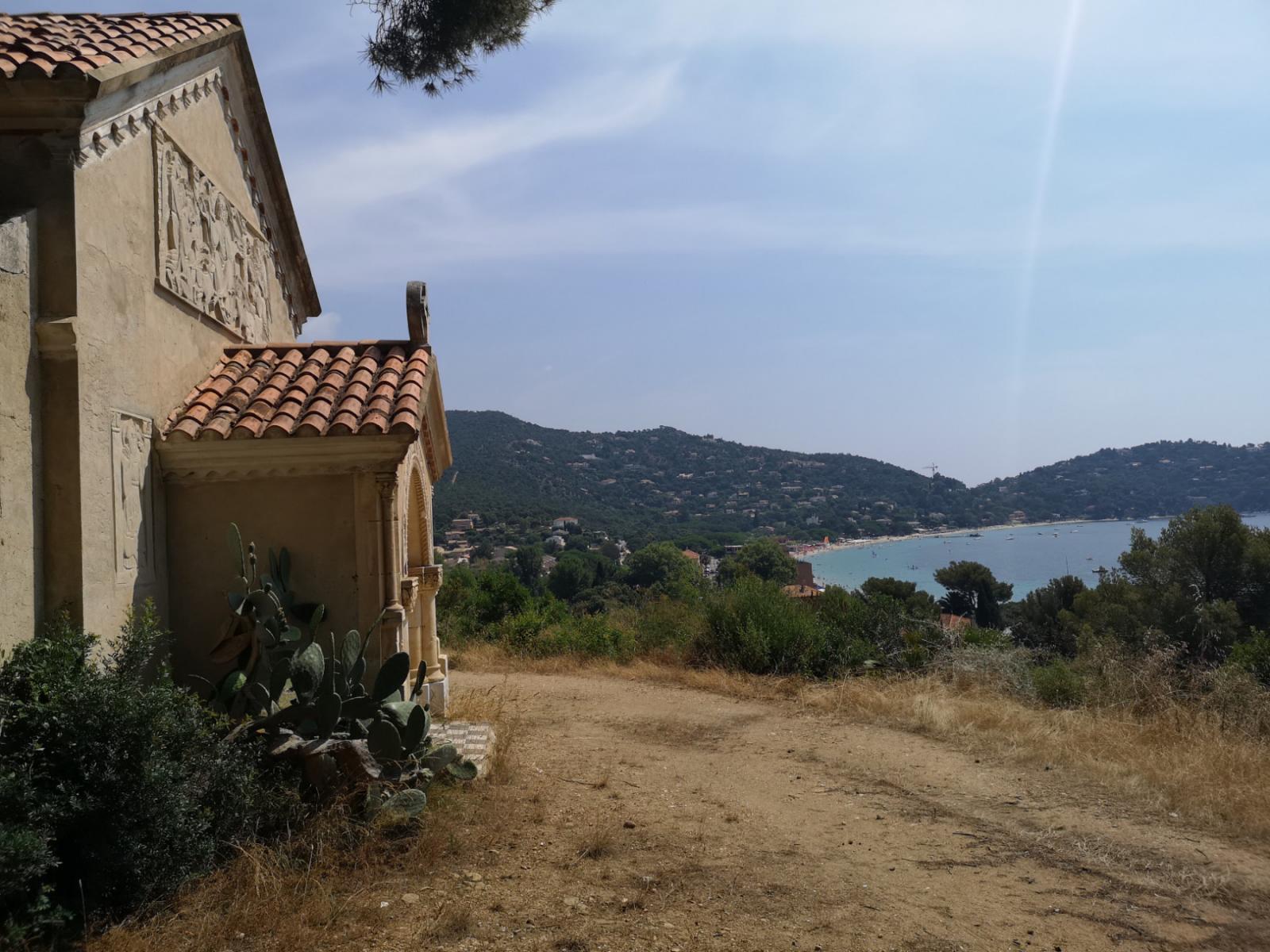 Classified as a French heritage site, the Domaine du Layet is an emblematic architectural ensemble of Le Lavandou. We wanted to share its little-known and unusual history, which is intrinsically linked to the creation and development of the city of dolphins and whales.
Originally, Hyppolite Adam, nicknamed "the first man" of Lavandou. Descendant of a rich family of industrialists from Boulogne-sur-Mer, he was the owner of a bank and mayor of Outreau. The businessman hears about the project to build the first railway line between Toulon and Saint-Raphaël. He decided to invest in it and therefore to discover the region. We are in the 1880s.
Hyppolite Adam arrives by boat in Le Lavandou, and more precisely, at the Layet beach. At that time, it was only possible to reach it by sea. The area, which includes the Cap Layet, the Pointe du Rossignol and the Cap Nègre, is completely enclosed and overgrown. But magic happens, and it's love at first sight. Mr Adam discovers a real paradise on earth. He enlists the help of the local inhabitants to open paths and reduce the vegetation.
In 1888, he decided to settle with his family in Cap Layet. The place was so difficult to access that he imported by sea a Norwegian chalet, bought at the end of the 1889 Universal Exhibition in Paris. At the same time, around 1890, he decided to build a train station in Cavalière. The "petit train des pignes" went into service. It contributed to the development of the region, and more particularly to that of Lavandou and Cavalière.
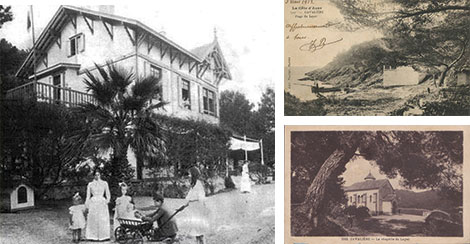
In 1892, Hippolyte Adam commissioned the plans for a chapel from his friend, the painter Jean-Charles Cazin. Both died in 1901, and it was Madeleine, the owner's eldest daughter, who put the finishing touches to the chapel's decorations. In 1909, the Lavandou, which had taken off, asked for and obtained its autonomy from Bormes les Mimosas on which it depended until then.
The chapel served as the parish church for Cavalière for more than 60 years, the family putting it at the disposal of the parish priest of Lavandou. The chalet was destroyed in a fire during the Second World War, when it was occupied by German soldiers. A villa replaced it, built in 1951 by the architect Robert Delrue.
Today, a square in Lavandou bears the name of its "first man", Hyppolite Adam. The Layet estate is about to be renovated by the new owners, and we hope that this will write a new page in the history of local heritage.