
The history of the Carqueiranne copper mine
The Cap Garonne copper mine in the Var region of France tells a story that combines industrial exploitation, local heritage and geological curiosities. Nestling among the hills of the Mediterranean coastline, this mine has left its mark on the region's economic and cultural landscape for several centuries.
The first evidence of copper mining in Carqueiranne dates back to ancient times. The peoples of the region, notably the Ligurians and Romans, used the deposits to make tools, weapons and ornaments. However, it was not until the 19thᵉ century, with the industrial boom, that mining took on a significant scale. In 1841, work was relaunched under the impetus of industrialists who saw the deposits as an economic opportunity. The Carqueiranne subsoil revealed rich veins of copper, sometimes associated with other minerals such as pyrite. At the time, demand for copper was exploding, particularly for the manufacture of electrical cables and engineering parts.
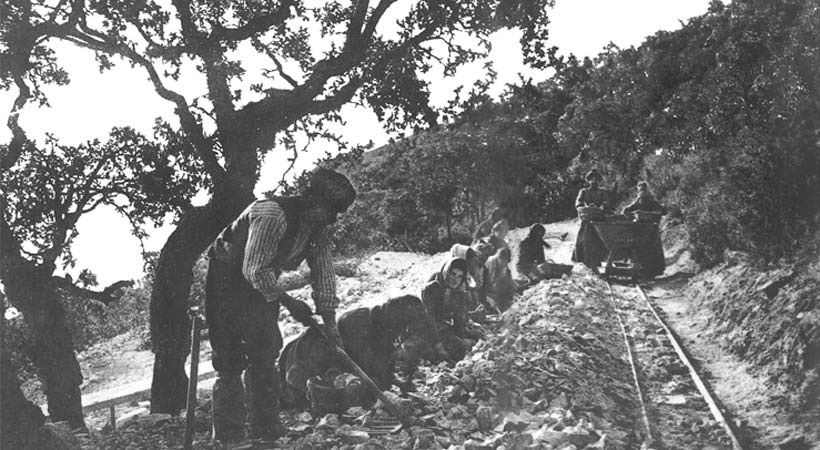 |
The Carqueiranne mine reached its apogee between the end of the XIXᵉ and the beginning of the XXᵉ century. Mining techniques were modernised, making it possible to extract large quantities of ore. Galleries were dug deep into the ground, sometimes up to 300 metres. The mine employed many local workers and attracted workers from other parts of France. It was a place to live in its own right, with its own rules and dangers, but also a strong sense of solidarity between miners. However, the working conditions were still very harsh, with stifling heat, the risk of cave-ins and mineral dust. |
After the First World War, mining activity began to slow down. International competition, particularly from richer and more accessible mines in South America and Africa, made mining less profitable. What's more, the copper veins were gradually running out. In 1929, the mine closed for good, putting an end to almost a century of intensive mining. The infrastructure was abandoned and nature gradually reclaimed its rights. In 1933, the mine became a mushroom farm, which lasted for 23 years.
|
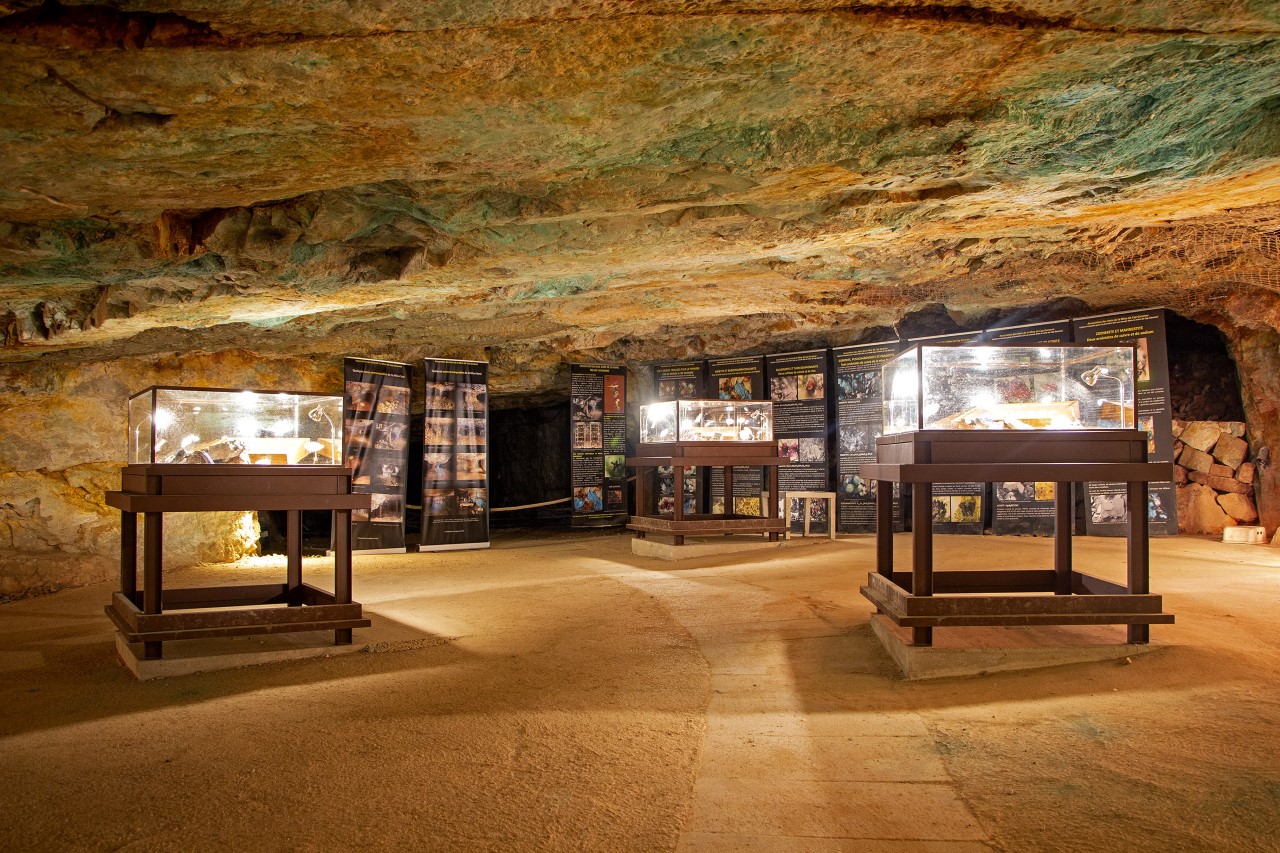
Today, the remains of the Carqueiranne copper mine still stand as testimony to the region's industrial past. The galleries and rubble have become popular haunts for geology and local history enthusiasts. Traces of malachite and azurite, two minerals emblematic of the site, can still be found. The municipality of Carqueiranne promotes this heritage through exhibitions and educational trails. The mine reminds residents and visitors that beneath the picturesque landscapes of the Var coastline lies a history rich in sweat and daring. |
 |
More information on the mine website : http://www.mine-capgaronne.fr/index.php
Copyright : the photos are also from the official website http://www.mine-capgaronne.fr/index.php